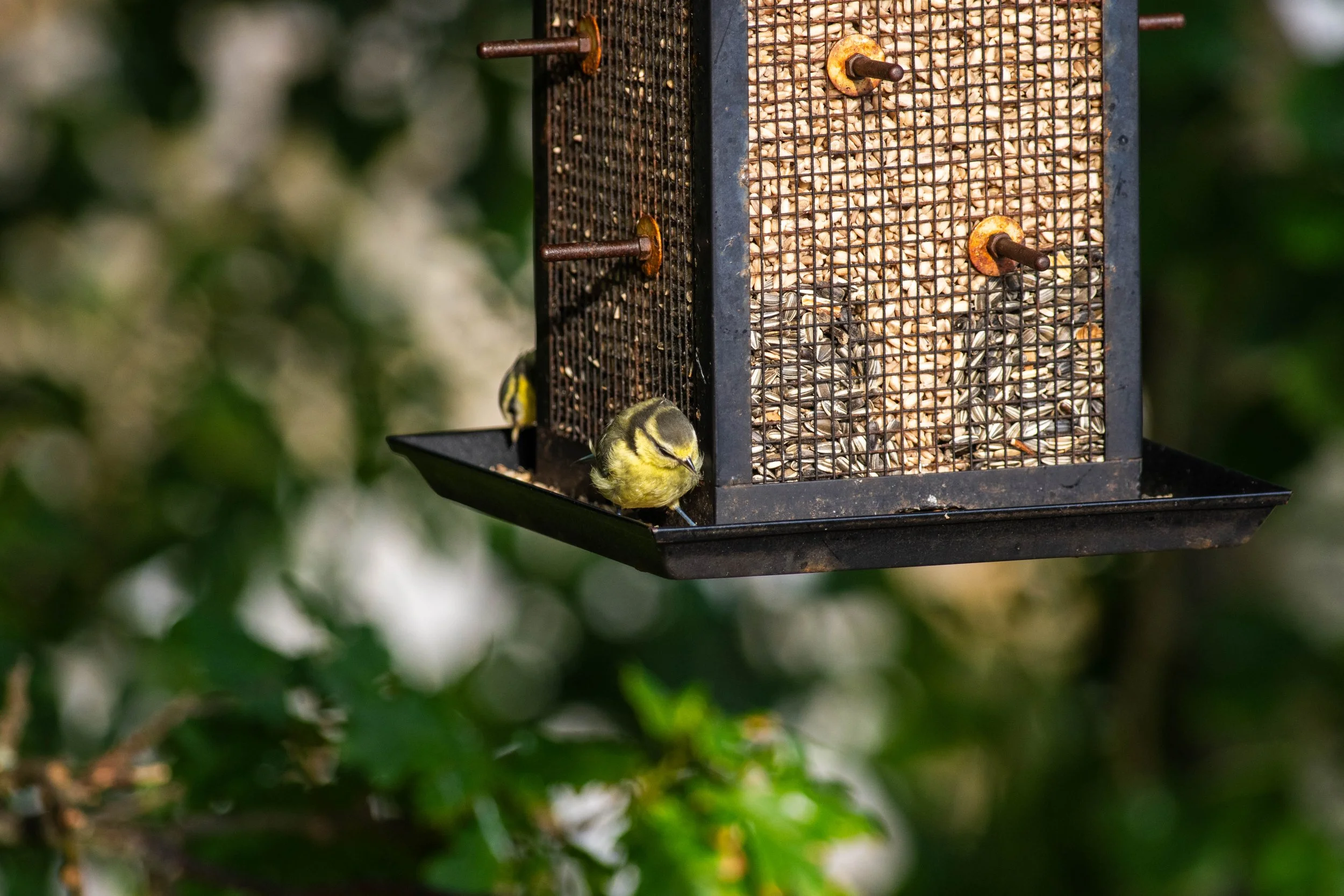
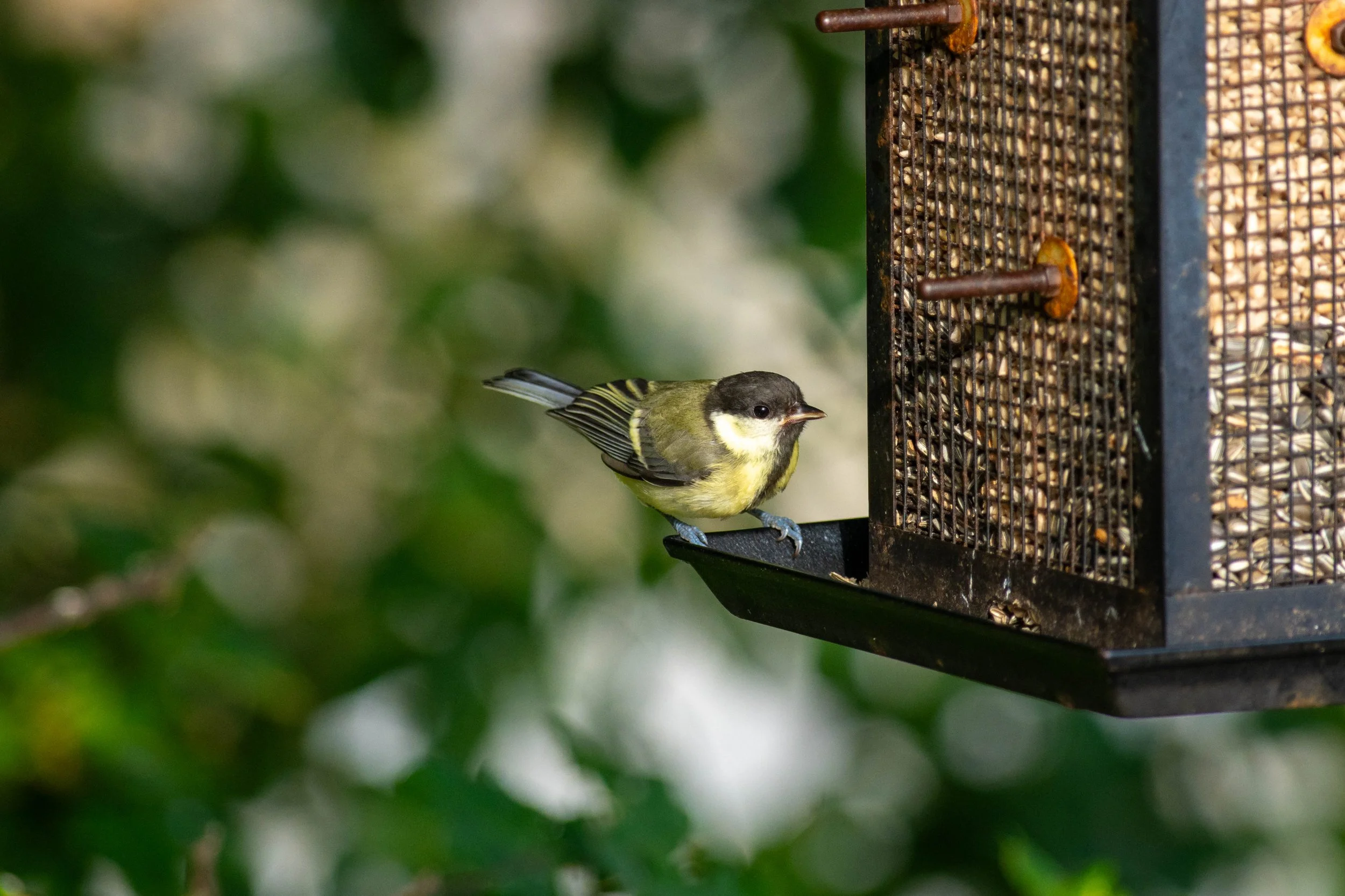
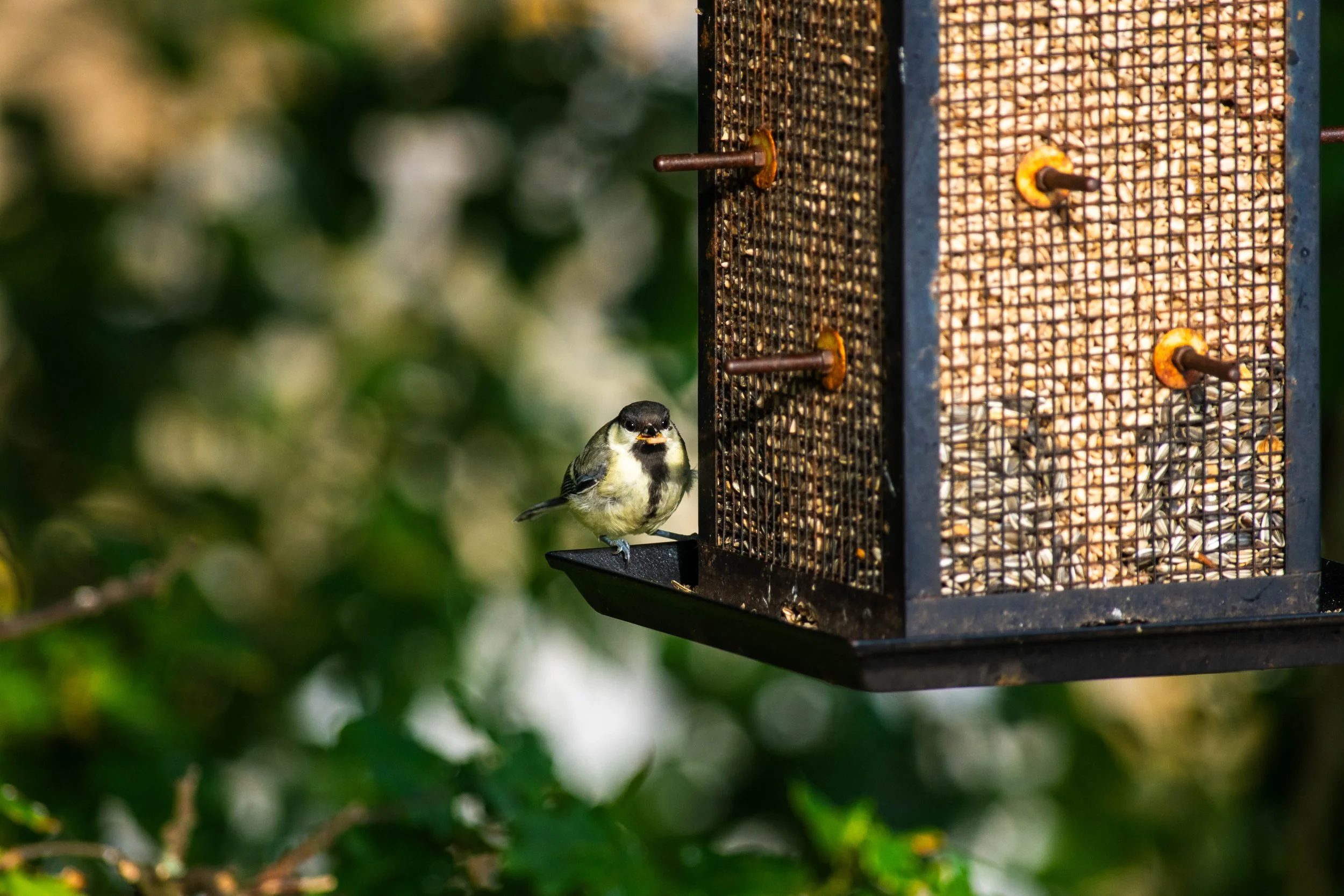
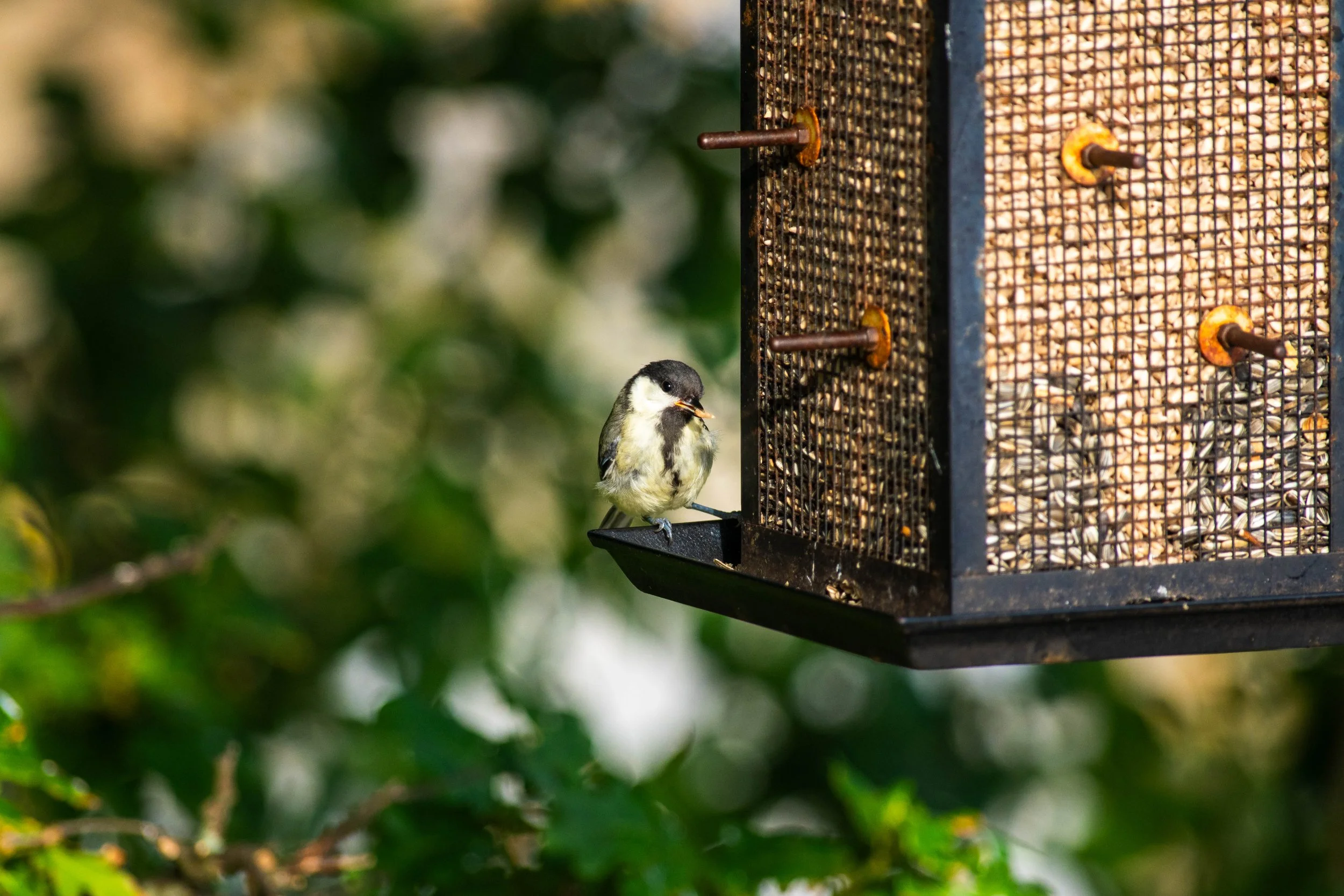
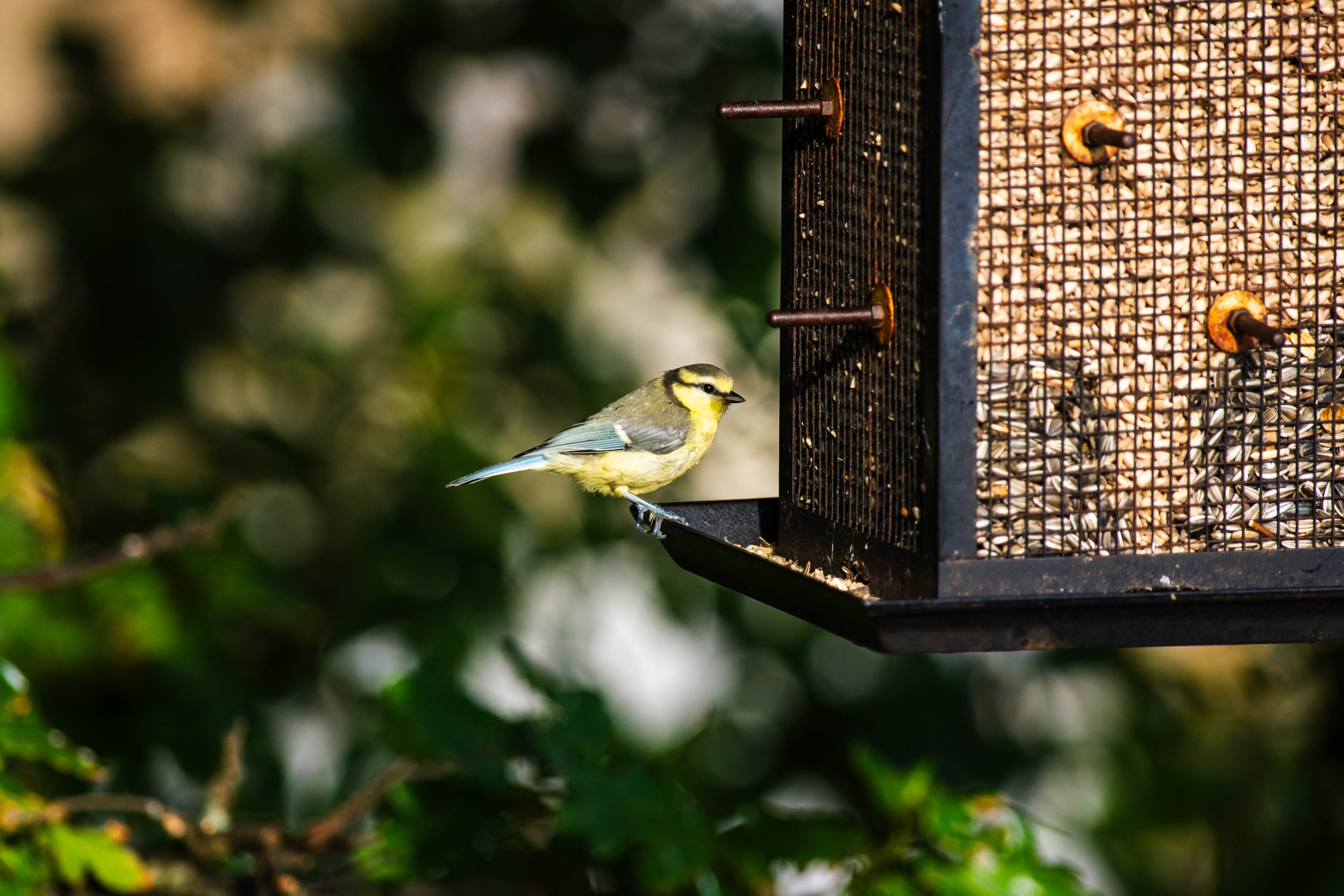
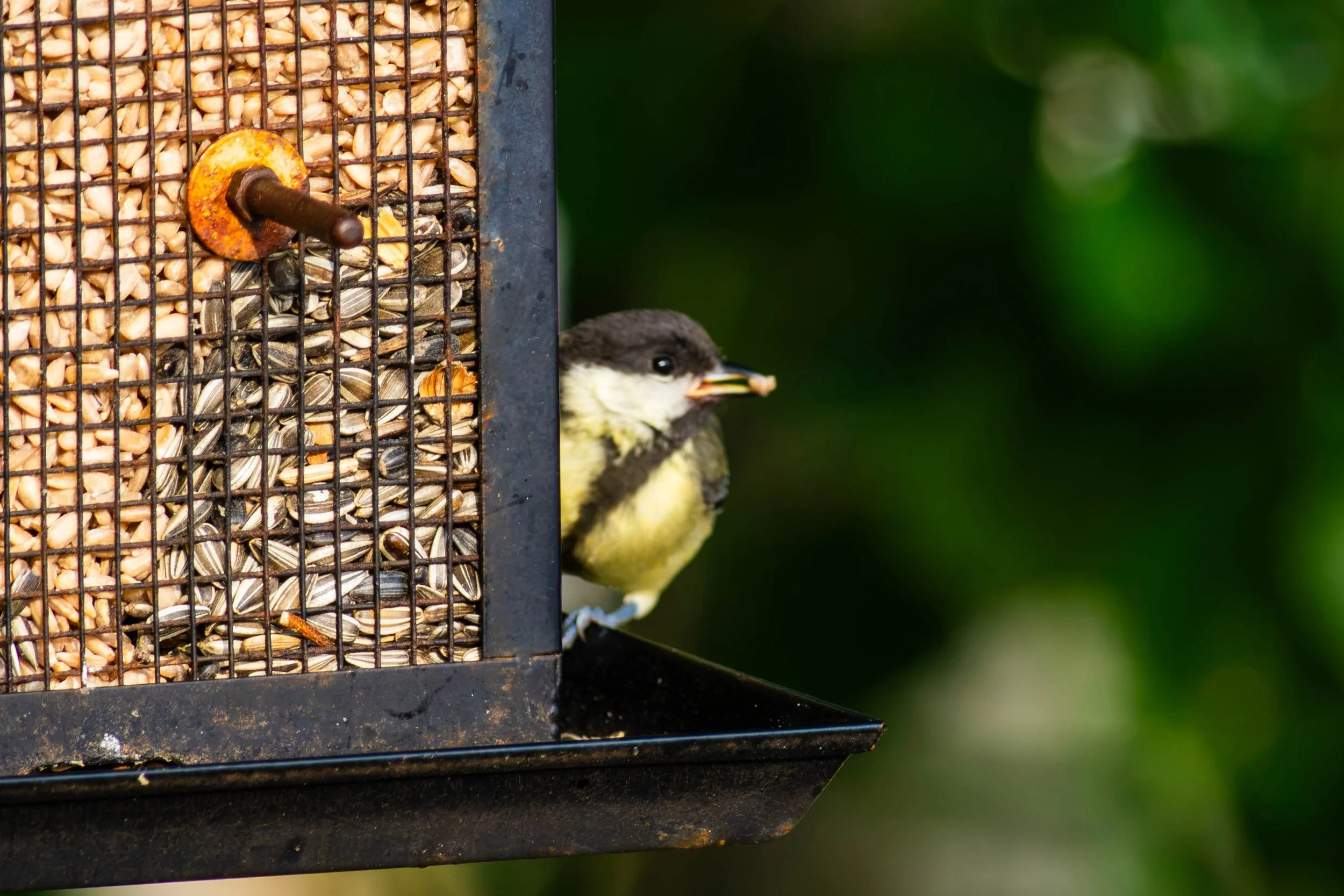
Birds at the birdfeeder
A small community built around a simple feeder. A bird feeder may look like a modest addition to a garden, but it quickly becomes a gathering point for an entire micro‑ecosystem. At the summer house, the feeder filled with seeds attracts a colourful trio of regular visitors: the European greenfinch, the European goldfinch, and the gentle doves that often feed calmly beneath them. Each species brings its own behaviour, personality, and visual charm — perfect subjects for photography.
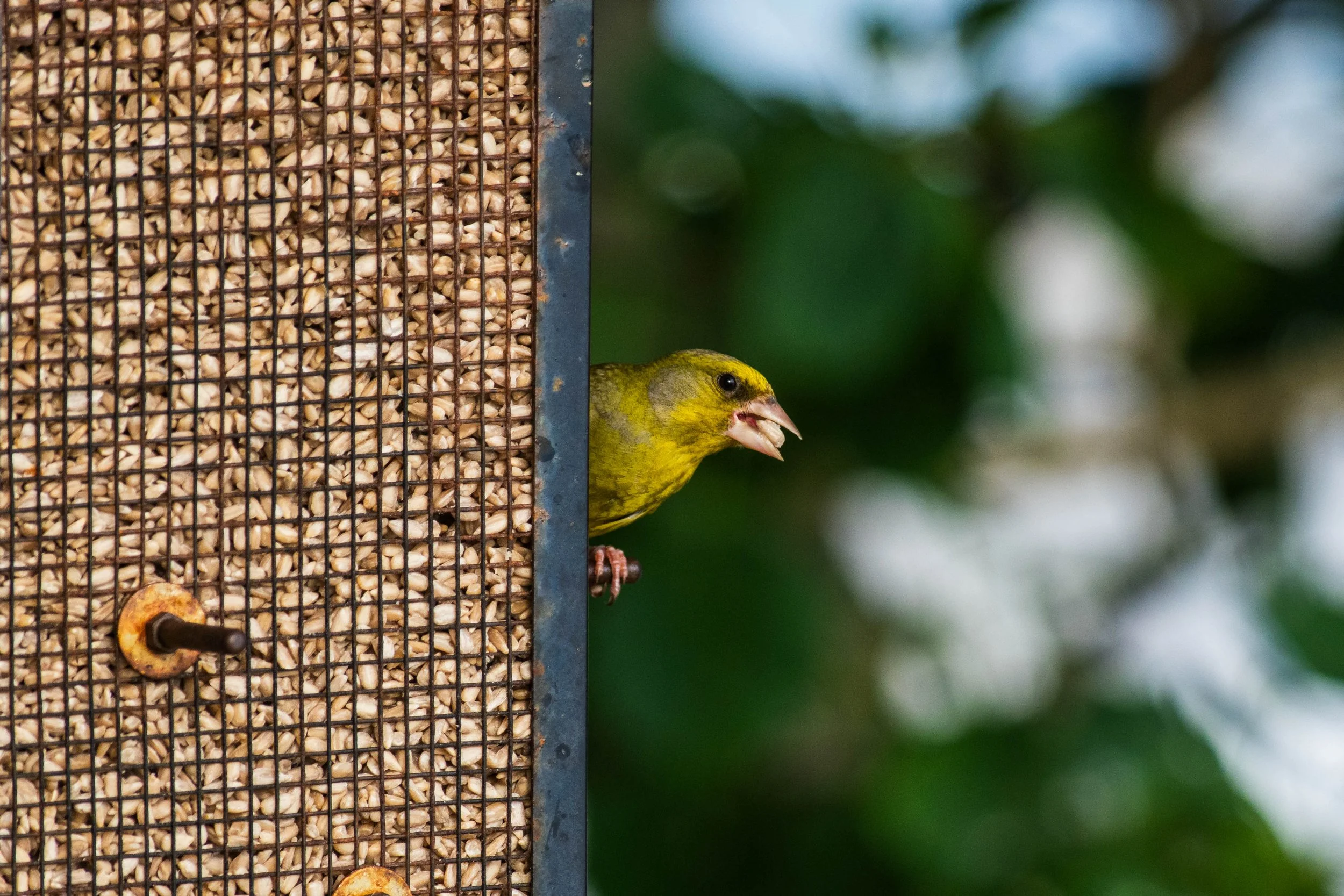
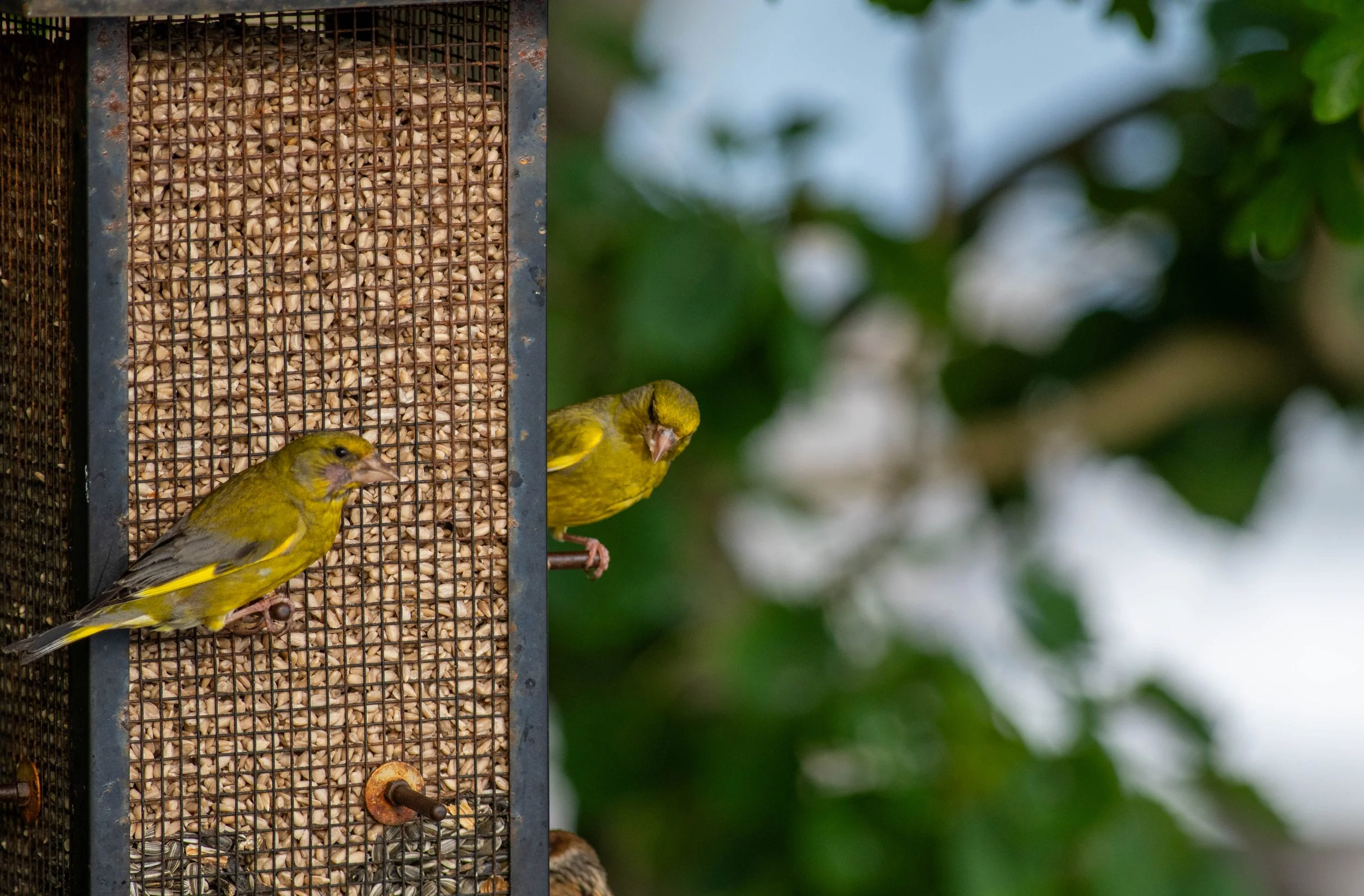
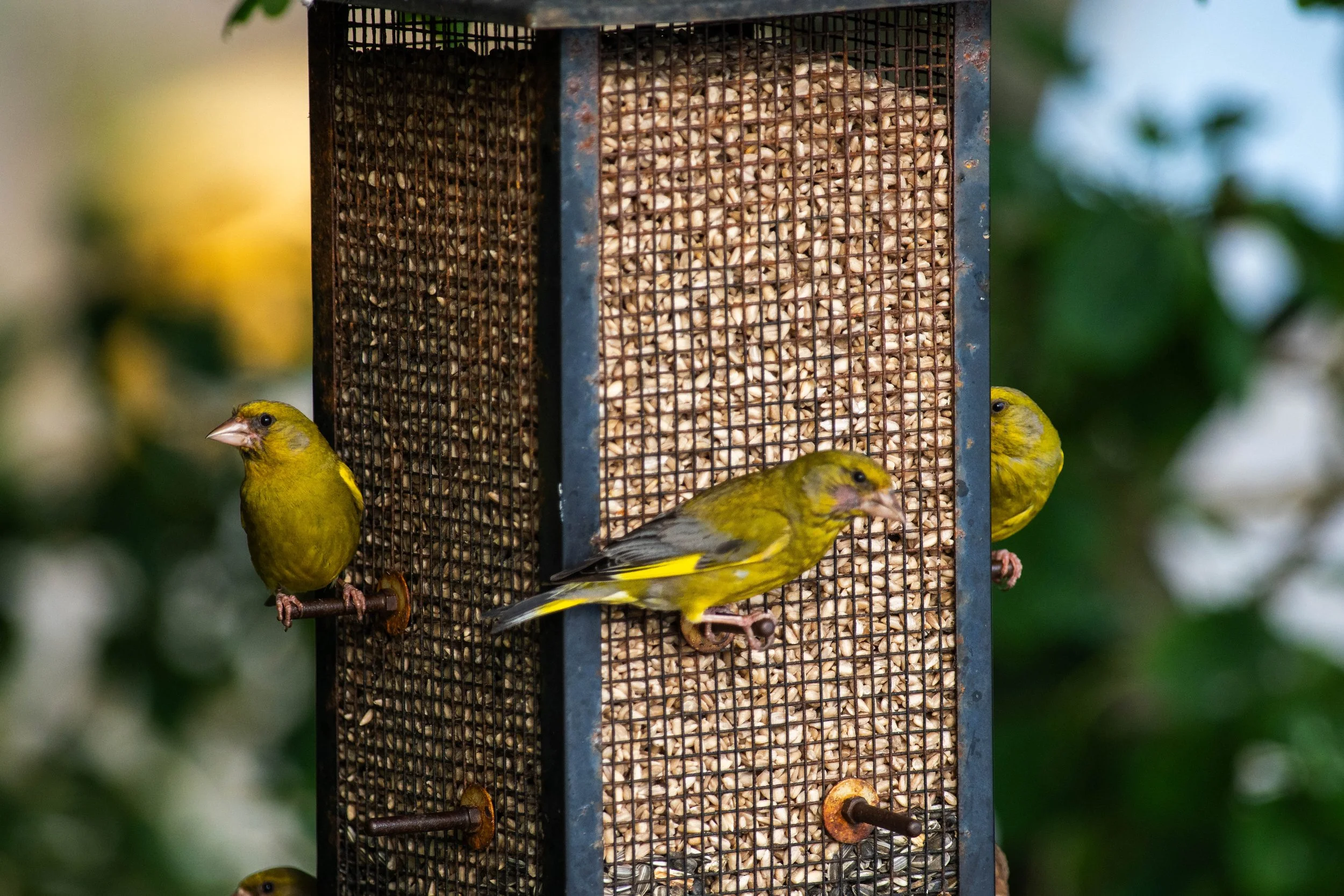
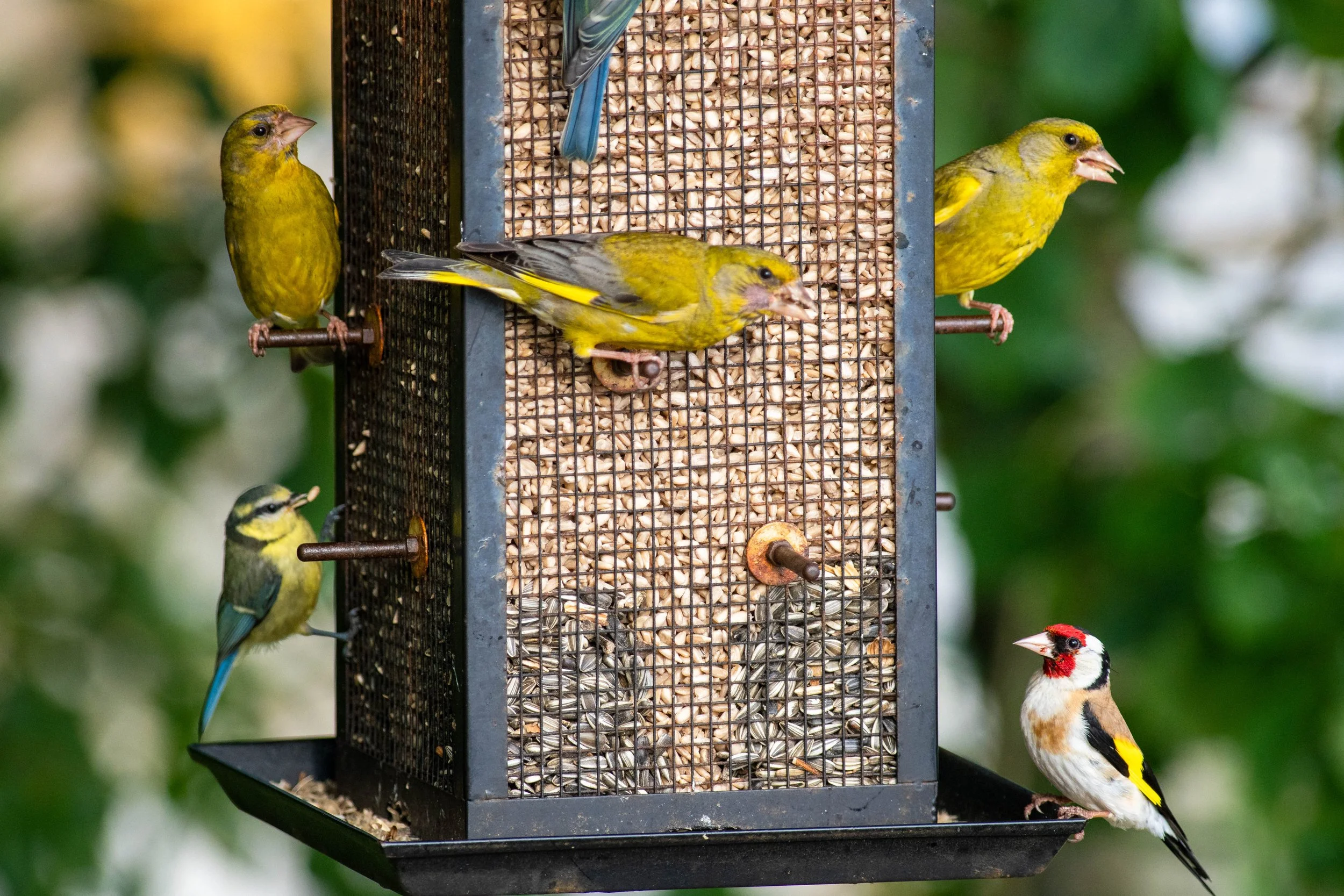
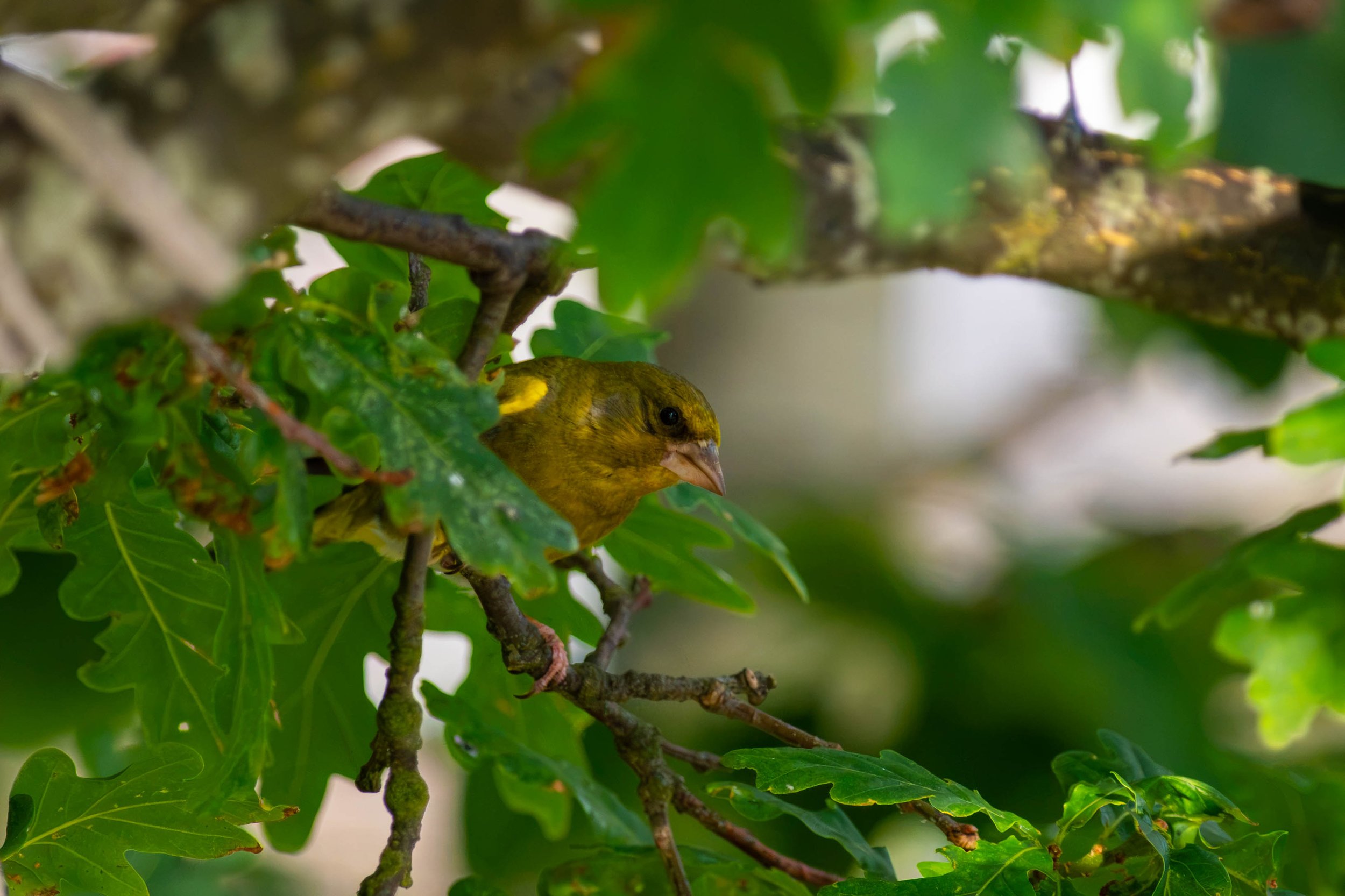
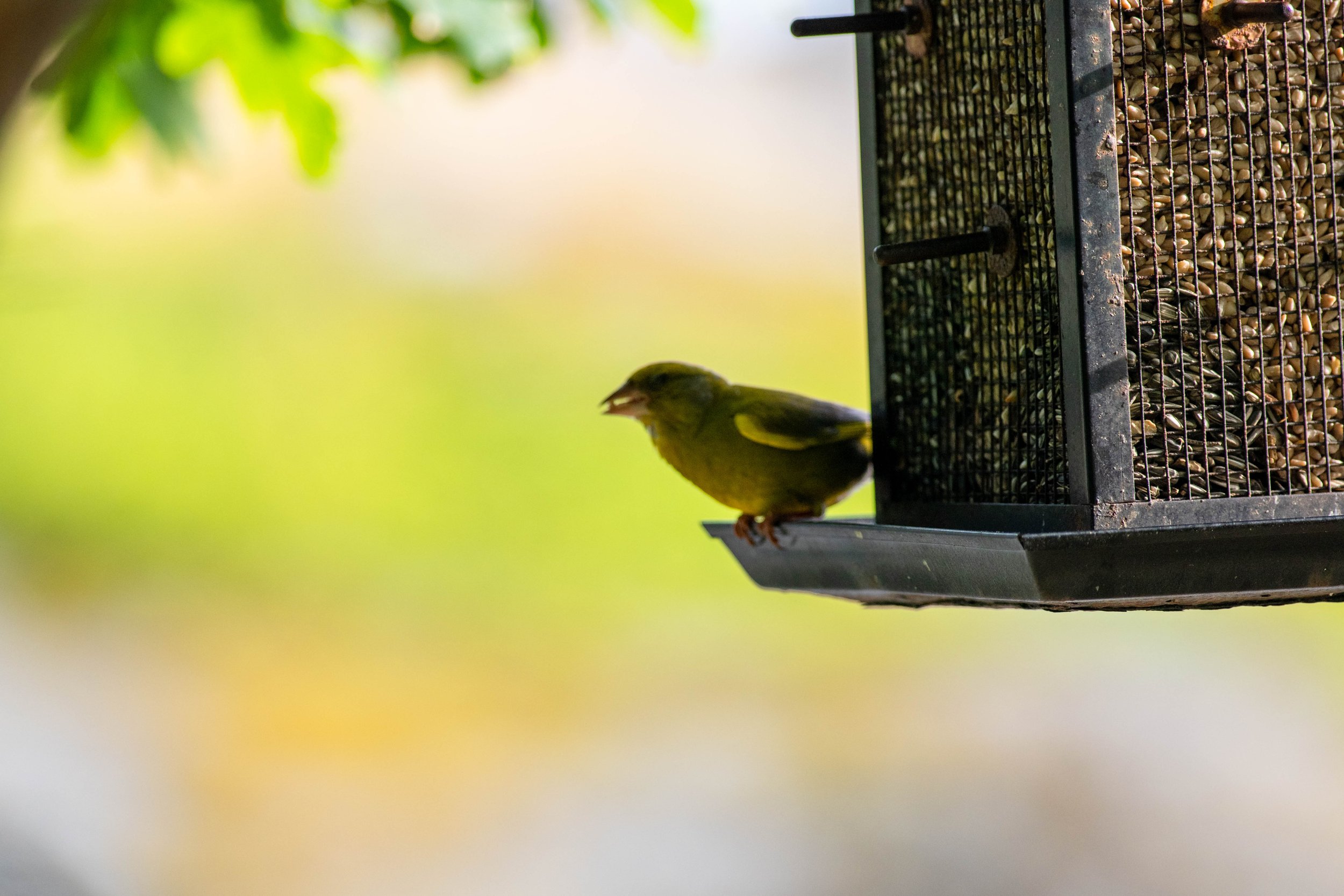
The European greenfinch (Chloris chloris) is one of the most common seed‑loving birds in northern Europe. Their olive‑green plumage with bright yellow flashes on the wings makes them stand out beautifully against wooden feeders and summer foliage. Greenfinches are confident birds; they often dominate the feeding station and aren’t shy about defending a good perch. Key features for this type of birds are it’s olive‑green body, yellow wing bars,. it’s diet consists of seeds, especially sunflower and mixed garden seed. It is a social bird that is vocal, often feeding in small flocks. Their sturdy beaks are perfectly adapted for cracking seeds, making them frequent and reliable visitors whenever food is available.
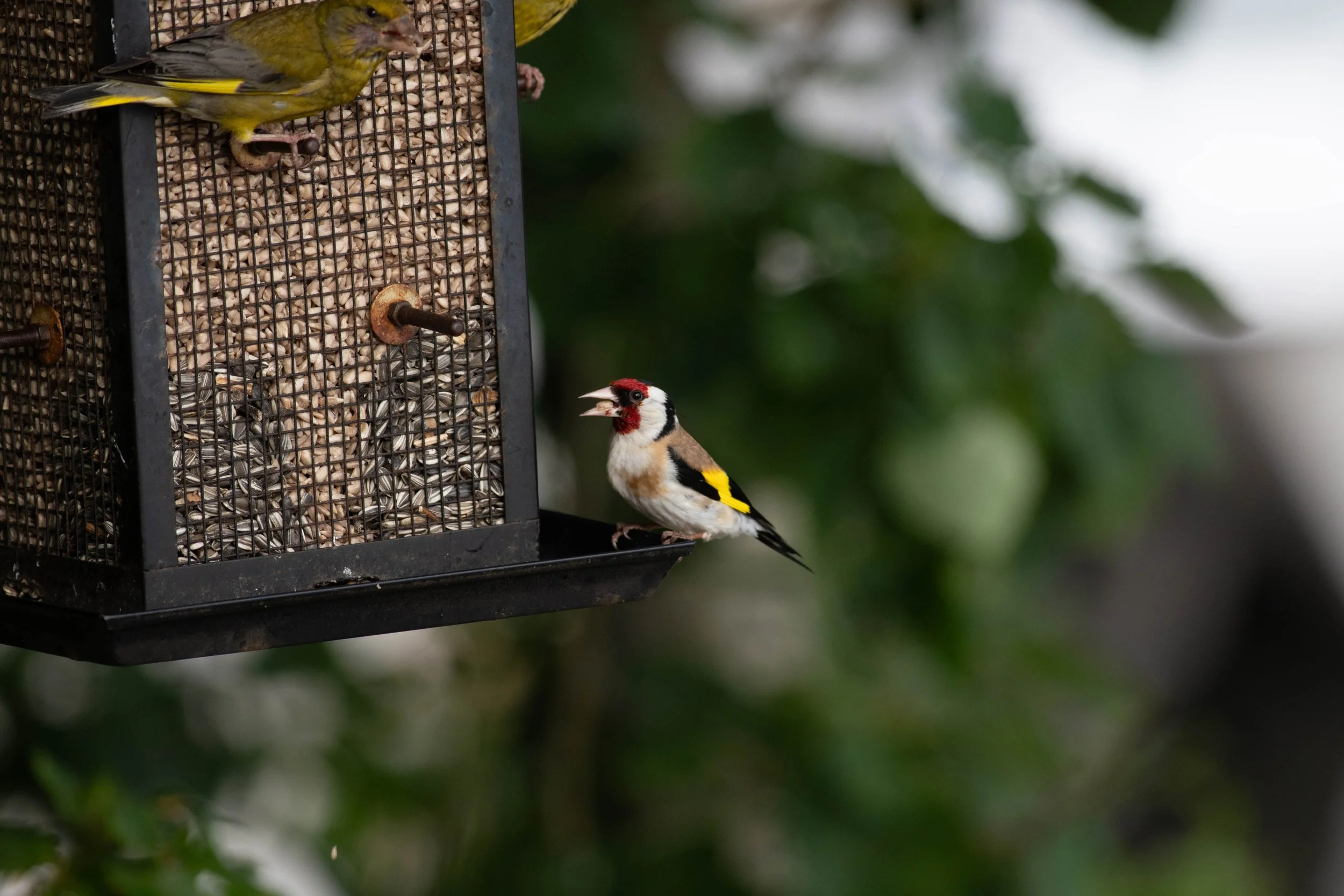
Few garden birds are as striking as the European goldfinch (Carduelis carduelis). With a bright red face, black‑and‑white head pattern, and golden wing patches, they bring a splash of colour to any feeder. Goldfinches are more delicate and agile than greenfinches, often perching lightly on the feeder edges and picking seeds with precision. Key traits for this type of birds are it’s red mask, black‑white head and golden wings. It’s diet consists of fine seeds, thistle, nyjer, and small garden seed. it is a gentle type of birds with melodic calls, and it often feeding in small flocks. Their soft, tinkling song adds a musical backdrop to the garden, especially in early mornings and late afternoons.
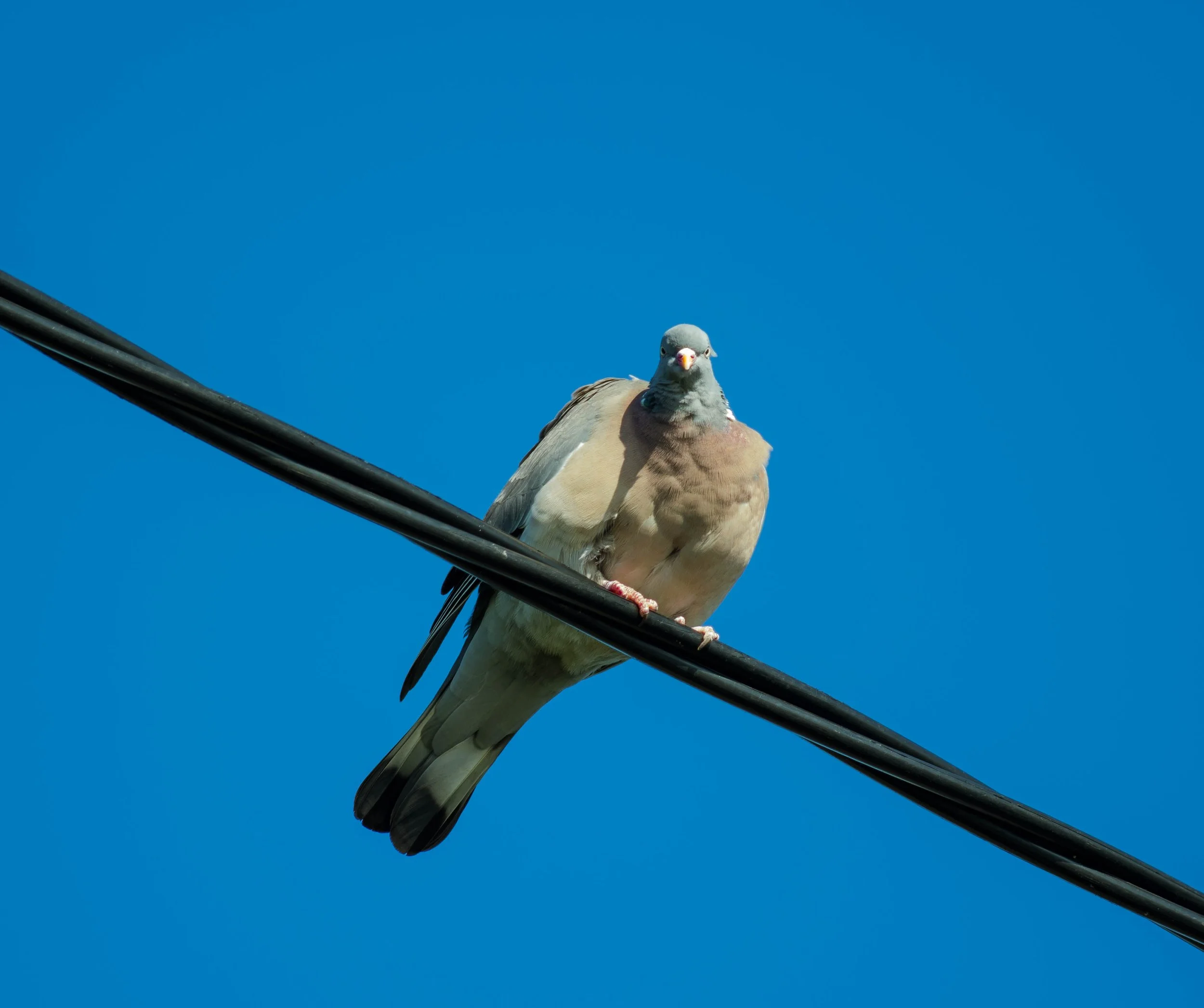
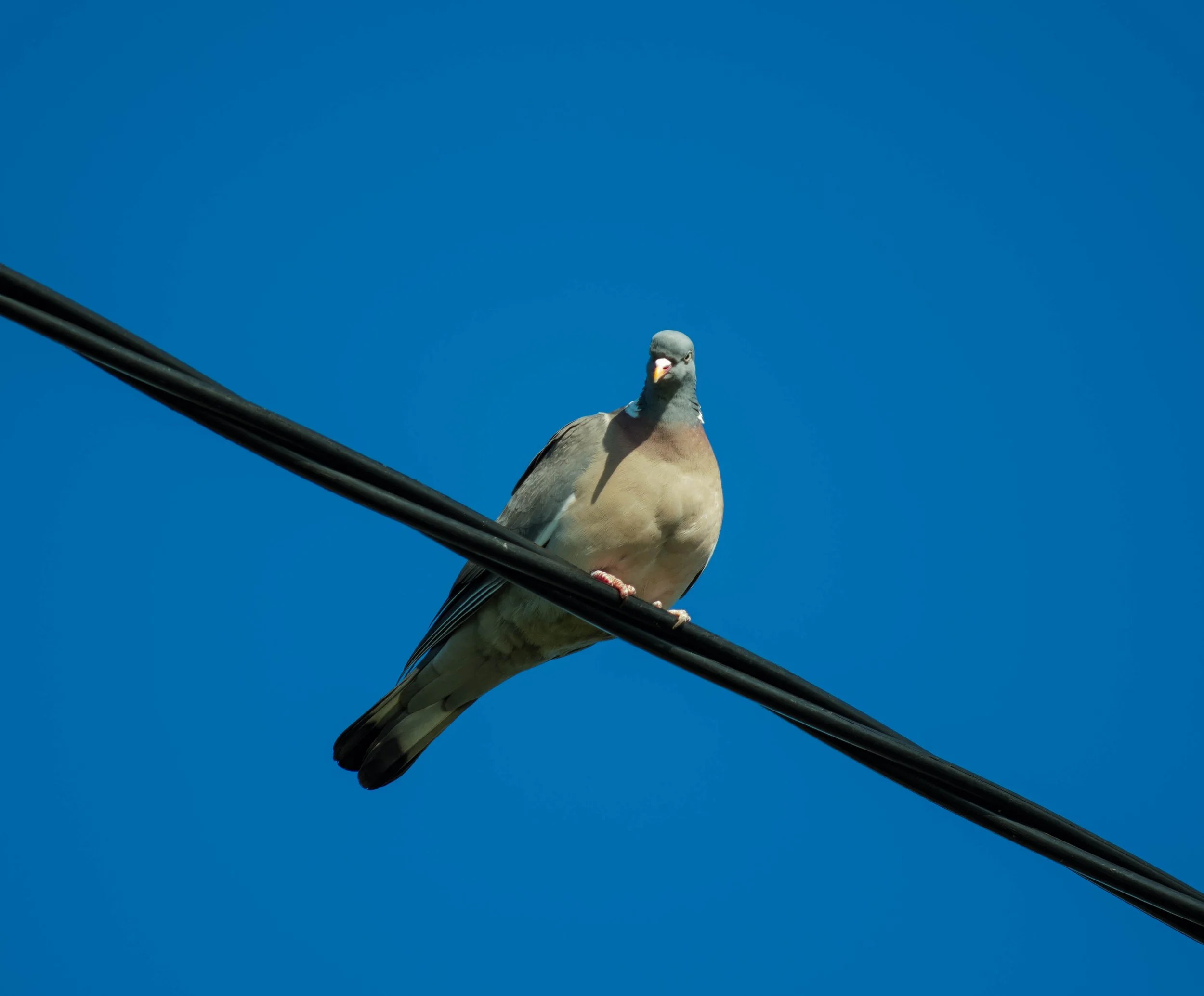
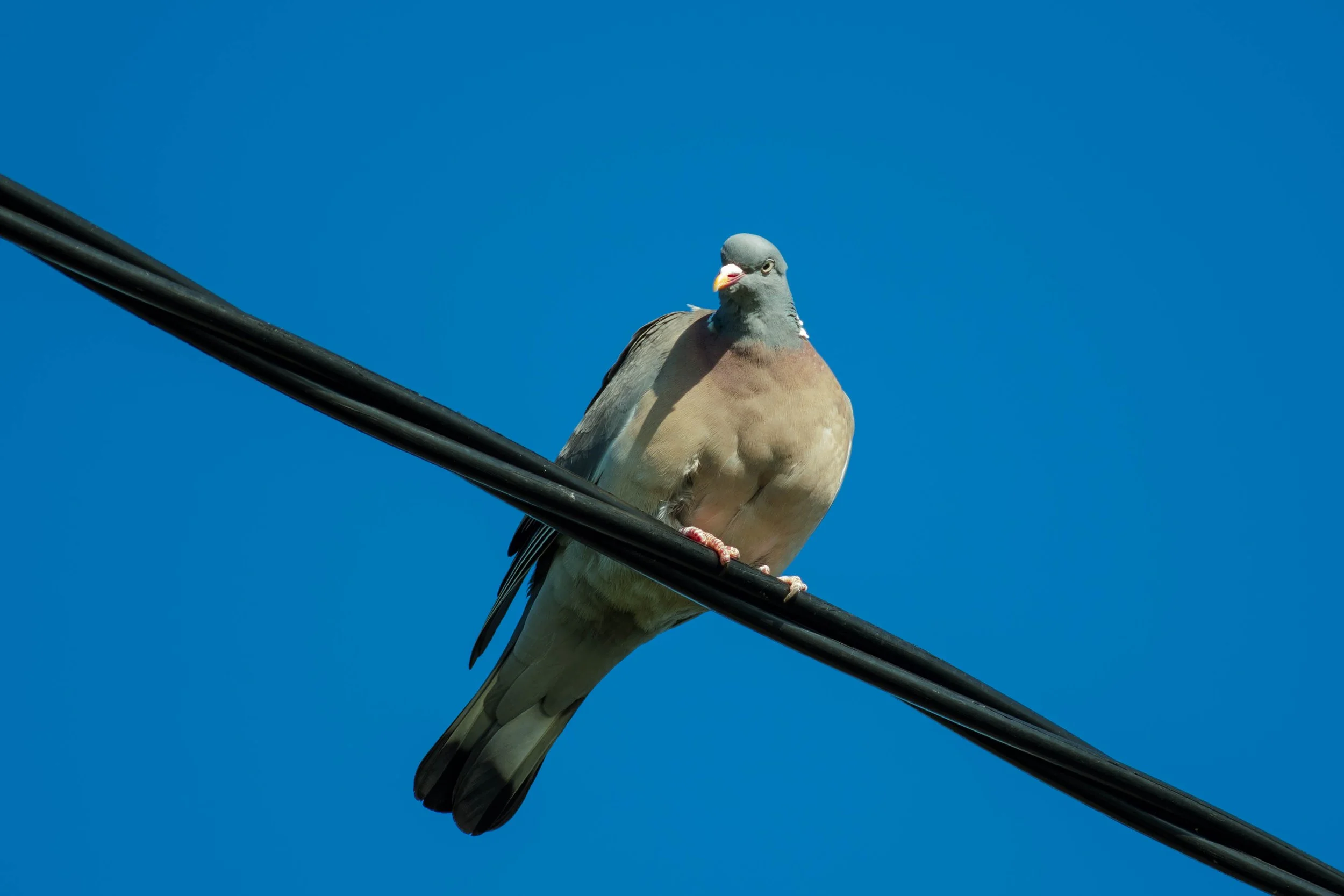
Doves, often called Eurasian collared doves or feral rock doves, brings a calm presence to the feeding area. They typically feed on spilled seeds beneath the feeder, moving slowly and deliberately. Their soft grey tones and gentle nature make them excellent photographic subjects, especially in contrast to the more colourful finches. Key traits are it’s soft greys, subtle patterns. The diet consists of seeds, grains, and leftovers from other birds. They are a peaceful, ground‑feeding type of bird, and are often seen in pairs. Their cooing calls and steady movements create a serene atmosphere around the feeder.
Bird feeders do more than attract beautiful species for photography. They support local wildlife in meaningful ways. Feeders provide reliable nutrition during breeding season, cold spells, or periods of low natural food availability. A simple feeder can attract a surprising variety of birds, helping maintain healthy local populations. Feeders bring birds close enough for detailed observation, photography, and education. Birds help control insects, spread seeds, and contribute to a balanced environment. For photographers, feeders create predictable opportunities: birds return frequently, behave naturally, and offer a range of poses and interactions that are otherwise difficult to capture.
Here are some pictures of greenfinches, goldfinches, and doves that tell a story of how a simple feeder can create a lively, colourful community. These species each bring their own charm, from the bold greenfinch to the elegant goldfinch and the peaceful dove, making the summer house garden a perfect stage for bird photography.
Use arrows on left and right side of the picture to show previous or next image.