Chapter 08: Macro photography
|
Equipment |
How it works |
Advantages |
Disadvantages |
Typical magnification |
|
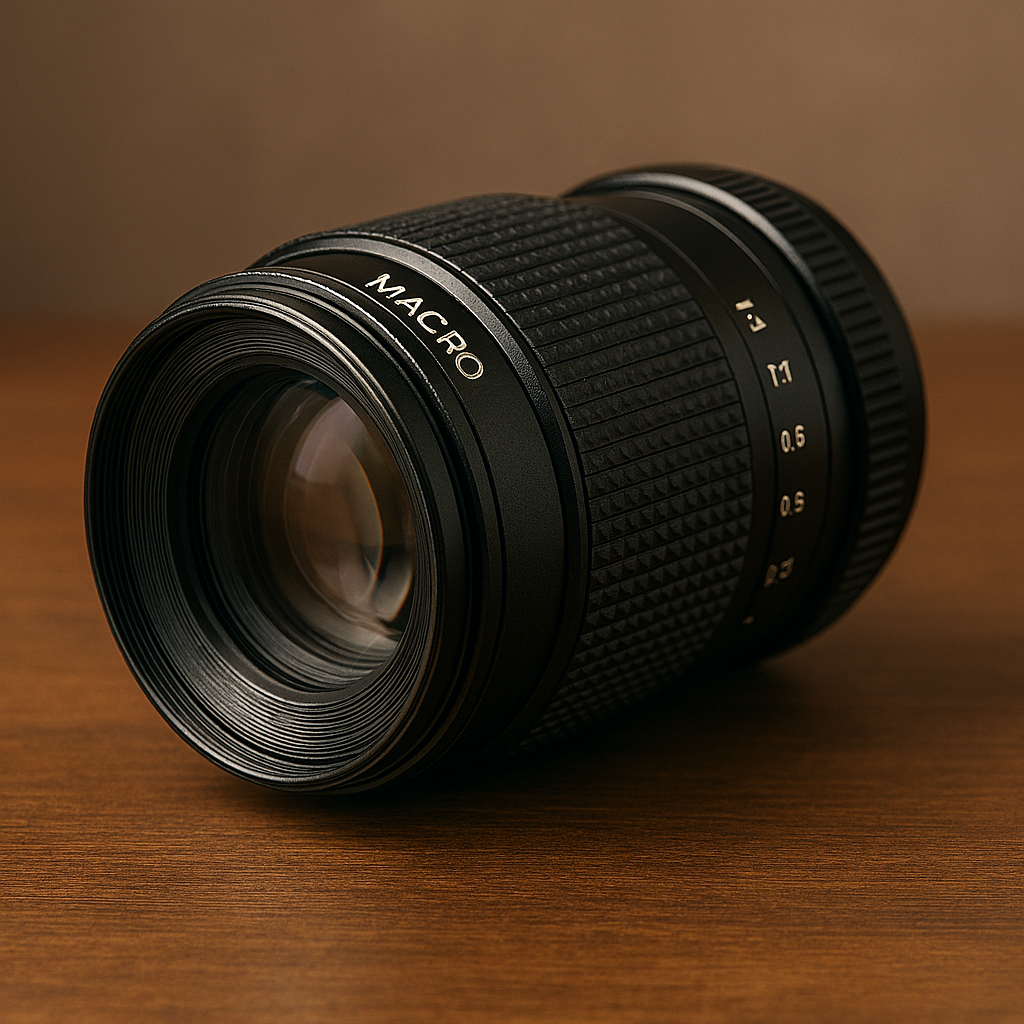
Macro lens |
A dedicated lens designed for close focusing, often with 1:1 magnification |
Best image quality, easy to use, good working distance |
More expensive than other solutions |
1:1 (some 2:1) |
|
Reversed lens |
A regular lens mounted backwards using a reversing ring |
Very inexpensive, extreme magnification possible |
Short working distance, manual aperture, more fiddly |
1:1 to 4:1 (depends on focal length) |
|
Bellows |
Variable distance between lens and camera to increase magnification |
Flexible magnification, capable of extreme macro |
Large, impractical in the field, often fully manual |
1:1 to extreme macro (5:1+) |
Macro lenses are engineered to maintain sharpness, flatness of field, and low aberration at close focusing distances. Most achieve true 1:1 magnification without additional accessories.
Optical Design Features
Floating element groups to maintain sharpness across focus range
Flat field correction (important for product and document macro)
Optimized coatings to reduce flare at short working distances
Internal focusing mechanisms to maintain balance and reduce breathing
Performance Characteristics
Working distance varies by focal length:
50–60 mm: short, ideal for studio work
90–105 mm: balanced for general macro
150–200 mm: long working distance for insects and wildlife
Autofocus is usable at moderate magnifications but often unreliable at 1:1
Effective aperture increases at close focus due to focus breathing and optical extension
Strengths
Highest overall image quality
Predictable handling
Versatile for nonmacro use (portraiture, product work)
Choosing the right system
Macro photography is a technical discipline that rewards understanding of optical geometry, magnification ratios, and mechanical stability. Whether using a reversed lens for extreme magnification, a bellows system for controlled studio work, or a dedicated macro lens for consistent field performance, each method offers unique capabilities. Mastery comes from understanding how these tools manipulate the optical path and how to control light, motion, and depth of field at microscopic scales. In the table below I have tried to list considerations and when to choose what equipment.
Equipment used for macro photography