Chapter 02: Lenses and other essential accessories
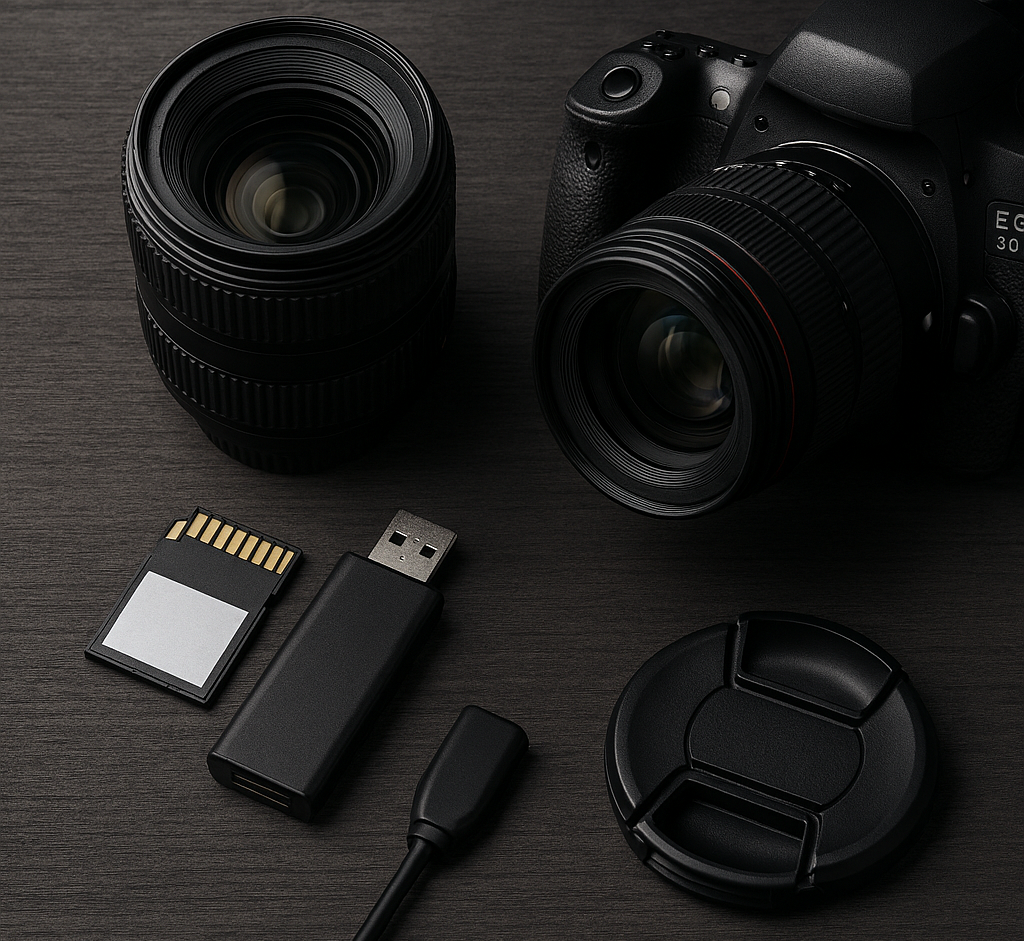
Photography is not just about the camera body or any of the other technical aspects I mentioned in the previous article. The gear you pair with it; lenses, filters, memory cards, batteries, and even cleaning tools can make the difference between getting the shot and missing it entirely. Below is some practical information about the accessories that matter most, why they matter, and how they improve your workflow in the field. I am covering additional equipment that are nice to have, and not necessarily essentials, in the part “03 additional gear”.
Your choice of lens shapes the look of your images far more than the camera body does. New models of camera bodies can give you somewhat better resolution, somewhat better performances in ISO or perhaps somewhat more pictures per second and so on. A good lens can to a far extend be more important than the camera body. Different lenses offer different perspectives, depths of field, and light capabilities. As I mentioned in the previous part: if you put your money into good lens(es) you can have it (or them) for a long time, and the lens(es) will outlive your camera bodies.
Lenses comes with some accessories, at least a lens hoods. Most people do not use this, but you really should. The lens hood can reduce lens flare (white-ish dots on the image). It also protects the lens in case it bumps into something or if accidently you drop the camera to the ground. Lens covers and back covers comes with lenses as well and protect the front and back of the lens when the lens is not in use.
Fast lenses (large aperture)
A “fast” lens has a low f-number (like f/1.4, f/1.8, or f/2.8), and this gives you:
· More light hitting the sensor
· Shorter shutter speeds that freeze or capture motion
· Shallow depth of field for subject isolation
· Better low‑light performance without raising ISO too much. This is handy if you i.e. take pictures indoor in somewhat dim environments.
Fast lenses are especially useful for sports, wildlife, portraits, and indoor photography.
Zoom vs. prime lenses
· Zoom lenses give flexibility and convenience because you may zoom a lot. Great for travel, events, and general use.
· Prime lenses offer better sharpness, wider apertures, and often lower weight, but they often lack the “width” in focal length that zoom lenses has. Prime lenses are ideal for portraits, street photography, and low light.
Prime lenses often have a fixed focal length, i.e. 50mm, while zoom lenses can be i.e. 60-250mm.
There are a few instances where lenses can be called “specialty lenses” and some of these cases are listed below:
· Macro lenses for extreme close‑ups. These lenses have a 1:1 magnification ratio, which is desired for macro photography as it presents whatever you take pictures of 1:1. I cover more of macro lenses and different techniques in macro photography in part “07 macro photography”.
· Ultra‑wide lenses for landscapes and architecture.
· Telephoto lenses for wildlife and sports, i.e. 500mm or 600mm lens.