Chapter 04: Different types of photography
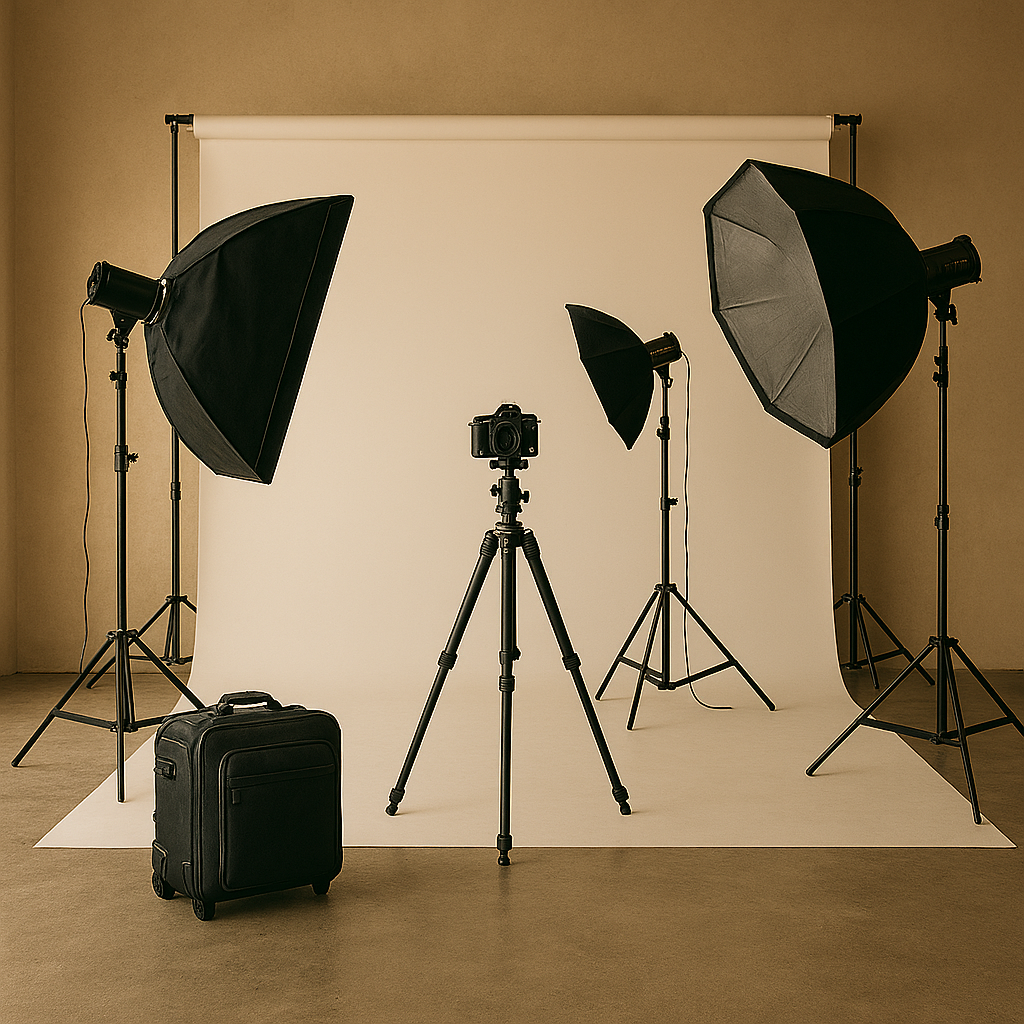
I am making this a “main genre” with portrait photography and still life photography as subgenres. Some may argue that they are independent styles of photography, but because of their similarities in equipment needed I group them together.
Studio, portrait and still life photography are probably styles of photography that can be the most gear dependent. Not because you need a lot of equipment to get started, but because everything you add gives you more control over light, mood, and consistency.
Your main light sources are usually a strobe or flash or a continuous LED panel. I have not done much studio photography but have the impression multiple light sources are used together, depending on the effect you want.
Fill light is used to soften shadows created by the key light. This light can be a second light, a reflector or a large softbox placed opposite the key (main) light.
Background light adds separation between subject and background or creates gradients.
Hair light or rim light are placed behind or above the subject to highlight edges and add depth.
<sett inn bilde av ansikt som viser forskjellige teknikker for lys>
Light modifiers control the quality of light. This includes:
Softboxes that creates soft, flattering light.
Umbrellas are cheap, portable, and great for soft light.
Beauty dishes are perfect for portraits with crisp, glamorous contrast.
Grids control spill and direct light more precisely.
Reflectors bounce light into shadows, and this is essential when working with portraits.
Diffusers soften harsh light from strobes or windows.
When there comes to stands and support there are:
Light Stands are basic support for strobes and modifiers. These are easier built than tripods for cameras.
Boom arm / cstand allows overhead lighting and precise placement.
Tripods are useful for consistent framing, long exposures, or tethered shooting.
Backgrounds are used for creating various backgrounds for the images.
Seamless backgrounds are basically just paper rolls in many colours.
Fabric backdrops are textured, artistic, or have classic portrait looks.
Collapsible backgrounds are portable and great for small spaces.
Background stand systems hold your backdrop securely.
Triggering and control systems are used to trigger the cameras. You have:
Wireless flash trigger syncs your camera with strobes or speedlights.
Remote shutter release avoids camera shake and helps with self-portraits.
Tethering cable or wireless Tethering allows shooting directly into a laptop for instant review.
Power and other practical tools include:
Extra batteries for camera, flash and lights.
Power strips and extension cables are handy because studios always need more outlets than you think.
Sandbags stabilize stands and prevent accidents.
In addition, you may need chairs, tables or whatever you may need for your images.
This probably sounds like a lot of equipment, but if you are going to try this kind of photography, as with all kinds of photography I guess, start simple and get more equipment if you want to expand and do it more.
You could start with something as simple as a camera and a window if you are doing it indoor. If you have a flash or a LED-light as sources of light, I recommend you use a diffuser as it softens the light and spreads it out. You could start with a reflector as well to reflect the light from the window. If you are using windows for light, use northern windows if you can. Light from the northern direction tend to be softer than the one directly from the south.